
Anúncios
Existence is not a final destination but an ever-evolving tapestry of moments, questions, and possibilities that continuously unfold before us.
From the moment consciousness awakens within us, we embark on a remarkable journey without a predetermined endpoint. This voyage through life presents us with countless opportunities to explore, discover, and reinvent ourselves. The beauty of existence lies not in arriving at some mythical finish line, but in embracing the perpetual state of becoming that defines the human experience.
Anúncios
Our lives are characterized by an inherent incompleteness that, rather than being a flaw, serves as the very source of our vitality and purpose. This unfinished nature of existence invites us to remain curious, to ask questions, and to seek meaning in the endless horizons that stretch before us. Every answer we find generates new questions, every achievement reveals new possibilities, and every conclusion marks a new beginning.
🌟 The Magnetic Pull of the Unknown
Curiosity stands as one of humanity’s most powerful driving forces. It propelled our ancestors to explore uncharted territories, to harness fire, and to reach for the stars. This same curiosity continues to animate our daily lives, pushing us beyond comfort zones and familiar patterns into territories we’ve never traversed.
Anúncios
The unknown doesn’t merely represent absence of knowledge; it represents potential. When we stand at the edge of what we know and peer into what we don’t, we’re not looking at emptiness but at a canvas of infinite possibilities. This perspective transforms uncertainty from something to fear into something to embrace.
Throughout history, the greatest breakthroughs have emerged from individuals who refused to accept existing limitations as final. They understood that every “impossible” was simply a challenge waiting for the right combination of imagination, persistence, and curiosity. From medical discoveries that have saved millions of lives to technological innovations that have connected our world, progress has always been fueled by those who questioned the status quo.
Cultivating Wonder in Everyday Moments
Curiosity isn’t reserved for scientists in laboratories or explorers on distant expeditions. It’s equally present in a child asking “why?” for the hundredth time, in an artist experimenting with new techniques, or in anyone choosing to learn something new regardless of age or circumstance.
The mundane becomes extraordinary when viewed through curious eyes. A daily commute transforms into an opportunity to observe human behavior. A routine conversation becomes a chance to understand different perspectives. A familiar task becomes an experiment in efficiency or creativity. This shift in perspective doesn’t require changing our circumstances; it requires changing our relationship with those circumstances.
🔄 The Paradox of Incompleteness
Western culture often emphasizes completion, achievement, and finality. We’re taught to finish what we start, to reach our goals, and to achieve closure. Yet the most fulfilling aspects of human experience resist such neat conclusions. Love deepens over time rather than reaching a final state. Wisdom accumulates throughout life rather than arriving at a moment of complete understanding. Personal growth is perpetual rather than culminating in a finished self.
This paradox reveals a profound truth: the unfinished nature of existence isn’t a bug but a feature. It’s what keeps life interesting, meaningful, and worth living. Imagine if everything could be completed, if all questions had final answers, if no new experiences awaited. Such a world would be stagnant, lifeless, and ultimately unbearable.
The Japanese aesthetic philosophy of wabi-sabi embraces imperfection and incompleteness as sources of beauty. A cracked ceramic bowl repaired with gold becomes more valuable because of its history and repair. Similarly, our own incompleteness—our flaws, struggles, and ongoing development—contributes to our unique beauty and value.
Embracing Process Over Outcome
When we shift focus from destinations to journeys, from products to processes, we liberate ourselves from the tyranny of final results. A writer doesn’t truly finish exploring language; they simply complete individual works. A musician never stops learning their instrument; they release recordings that capture moments in an ongoing evolution. An entrepreneur doesn’t solve all business challenges; they navigate continuous adaptation.
This process-oriented mindset reduces anxiety about perfection while increasing engagement with present moments. We become less concerned with whether we’ve “arrived” and more invested in where we’re going and how we’re traveling.
🚀 Infinite Possibilities in Finite Lives
One of existence’s most beautiful contradictions is that within our finite lifespans, we encounter infinite possibilities. Every choice we make opens certain doors while closing others, yet the number of potential paths remains staggering. This abundance of options can overwhelm, but it can also liberate when properly understood.
The key lies in recognizing that we don’t need to exhaust all possibilities to live fully. Instead, we can embrace the possibilities most aligned with our values, interests, and circumstances while acknowledging that other valid paths exist. This selective engagement allows depth rather than superficial breadth.
Modern technology has amplified both our awareness of possibilities and our ability to pursue them. We can learn virtually any skill through online resources, connect with people across the globe, access information our ancestors couldn’t imagine, and explore creative outlets limited only by imagination. This democratization of opportunity means that background and geography matter less than curiosity and determination.
The Decision Paradox
With infinite possibilities comes the challenge of choice. Psychologist Barry Schwartz identified the “paradox of choice,” where too many options can lead to anxiety and paralysis rather than freedom. How do we navigate this abundance without becoming overwhelmed?
- Establish clear personal values that serve as decision filters
- Recognize that choosing one path doesn’t invalidate others; it simply reflects current priorities
- Understand that most decisions are reversible or adjustable, reducing pressure for perfect choices
- Accept that FOMO (fear of missing out) is a natural response to abundant options, not a sign you’re making wrong choices
- Practice gratitude for chosen paths rather than constantly second-guessing
These strategies help transform overwhelming possibility into manageable opportunity, allowing us to engage with life’s richness without becoming paralyzed by it.
💫 The Power of What’s Yet to Come
Future-orientation isn’t about dismissing the present or dwelling in fantasy. Rather, it’s about recognizing that significant portions of our lives remain unlived, offering opportunities for growth, change, and new experiences. This awareness can be profoundly empowering, especially during difficult times.
Viktor Frankl, Holocaust survivor and psychiatrist, observed that those who maintained hope for the future were more likely to survive concentration camps. This wasn’t naive optimism but rather a recognition that future possibilities provided meaning that helped endure present suffering. His insight applies beyond extreme circumstances to everyday challenges.
When we’re stuck in difficult jobs, relationships, or situations, remembering that current circumstances aren’t permanent destinations but temporary way-stations can provide crucial perspective. The power of what’s yet to come lies in its ability to contextualize present difficulties within larger life narratives.
Creating Rather Than Predicting the Future
The future’s power increases dramatically when we shift from passive prediction to active creation. We’re not merely subjects of fate waiting to see what happens; we’re co-authors of our stories, capable of influencing outcomes through choices and actions.
This creative agency applies across life domains. Career trajectories aren’t fixed but malleable based on skill development and networking. Relationship quality improves through intentional communication and effort. Personal health responds to lifestyle choices. While we can’t control everything, we influence far more than we often recognize.
The practice of setting intentions (distinct from rigid goals) helps harness future-oriented power. Intentions establish directions without demanding specific destinations, allowing flexibility while maintaining purpose. “I intend to prioritize health” offers more adaptability than “I will lose exactly 20 pounds,” while still providing motivation and focus.
🌱 Growth as a Perpetual State
Personal development isn’t a project with a completion date but rather a way of being. The growth mindset, popularized by psychologist Carol Dweck, recognizes that abilities and understanding can always expand. This contrasts with fixed mindsets that view characteristics as static and unchangeable.
Adopting a growth orientation toward existence means viewing challenges as opportunities, failures as feedback, and limitations as temporary rather than permanent. This doesn’t require toxic positivity that denies difficulties, but rather realistic optimism that acknowledges challenges while refusing to be defined by them.
Neuroplasticity research confirms that our brains remain capable of forming new connections throughout life. We can learn new languages in old age, develop new skills after retirement, and modify ingrained patterns through conscious effort. Biology supports what philosophers have long suggested: we’re never finished becoming.
The Role of Reflection
Growth requires not just forward movement but periodic reflection. Taking time to assess where we’ve been helps clarify where we’re going. Journaling, meditation, therapy, or simple quiet contemplation allow us to process experiences, extract lessons, and integrate insights.
This reflective practice prevents us from mindlessly repeating patterns while thinking we’re progressing. True growth involves both accumulating new experiences and deepening understanding of existing ones. The spiral of experience and reflection creates genuine development rather than mere accumulation.
🎯 Finding Meaning in the Unfinished
Existential philosophy grapples with meaning in a universe that offers no predetermined purpose. Rather than viewing this as nihilistic, many philosophers find liberation in it. If meaning isn’t externally assigned, we’re free to create it through our choices, relationships, and contributions.
The unfinished journey of existence becomes meaningful precisely because it’s unfinished. We’re not executing a predetermined script but improvising, creating meaning through authentic engagement with life’s possibilities. This perspective shifts responsibility from external authorities to individual agency.
Meaning emerges through various sources: relationships that connect us to others, work that contributes value, creative expression that manifests inner worlds, learning that expands understanding, and experiences that deepen appreciation. These meaning-sources remain available throughout life, adapting to changing circumstances and capacities.
Legacy and Impact
Part of existence’s power lies in its ripple effects. Our actions, words, and creations influence others in ways we rarely fully comprehend. A kind word might change someone’s day or even life trajectory. A created work might inspire someone decades later. A taught skill might propagate through generations.
Understanding this ripple effect adds dimension to daily choices. We’re not isolated individuals but interconnected nodes in vast networks of influence. What we do matters not just for ourselves but for others we’ll never meet. This awareness can be both humbling and empowering.
🌈 Embracing Uncertainty as Opportunity
The unfinished nature of existence guarantees uncertainty. We cannot know what tomorrow brings, much less next year or next decade. This uncertainty triggers anxiety in many people, yet it also represents the source of possibility.
If everything were predetermined and knowable, existence would lose its essential dynamism. Surprise, discovery, and genuine novelty require uncertainty. The unexpected plot twist that makes a story compelling, the serendipitous meeting that changes everything, the sudden insight that shifts perspective—all depend on life’s unpredictability.
Developing comfort with uncertainty is perhaps one of existence’s most valuable skills. This doesn’t mean recklessness or lack of planning, but rather holding plans lightly while remaining adaptable. It means building resilience rather than seeking control, flexibility rather than rigidity.
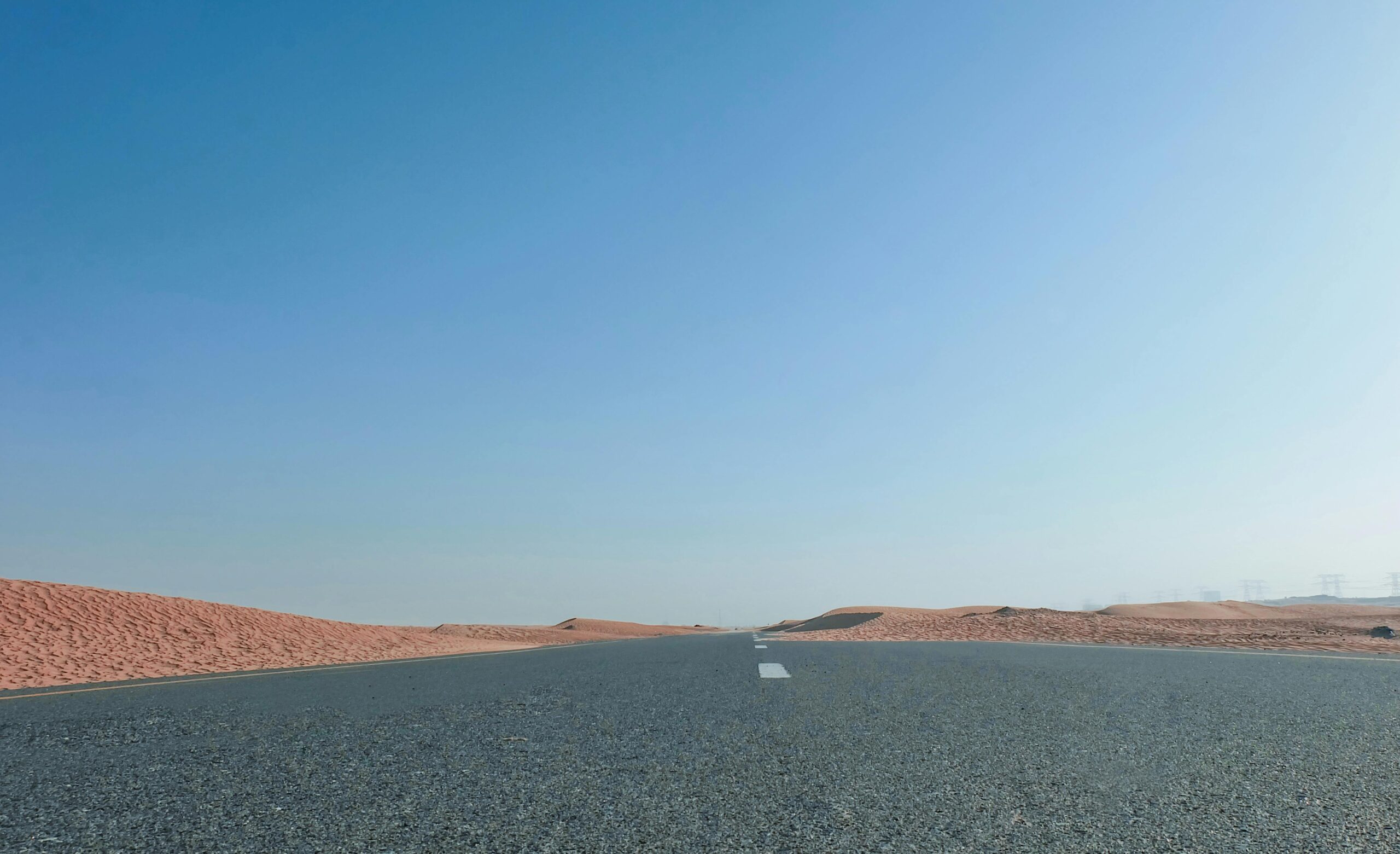
🔮 The Invitation Forward
Existence extends an ongoing invitation: to explore, to question, to create, to connect, to grow. This invitation doesn’t expire at certain ages or stages. The curious five-year-old and the curious ninety-five-year-old both embody life’s essential quality. What changes is context, not fundamental possibility.
Accepting this invitation requires courage because it means leaving comfortable certainties for uncertain explorations. It demands vulnerability because growth involves acknowledging current limitations. It necessitates persistence because meaningful development takes time. Yet the alternative—refusing the invitation, settling into stagnation—ultimately proves more painful than the discomfort of growth.
We stand always at the threshold between what we’ve known and what we might discover. Behind us stretches the accumulation of experiences, lessons, relationships, and achievements. Before us extends infinite potential, countless paths not yet taken, versions of ourselves not yet manifested. The present moment offers the choice of which direction to face.
The unfinished journey of existence beckons with curiosity about what questions we’ll ask next, infinite possibilities for who we might become, and the power of future moments not yet lived. This isn’t a burden but a gift—the profound gift of potential, of agency, of meaning-creation. Every day we wake represents another page in an ongoing story, another opportunity to engage with life’s essential incompleteness not as lack but as abundance.
Rather than seeking to finish this journey, perhaps wisdom lies in learning to travel it well—with curiosity, courage, compassion, and creativity. The destination matters less than the quality of our traveling. And in the traveling itself, we discover that existence’s unfinished nature isn’t what we must tolerate but what makes everything possible, meaningful, and ultimately worth embracing. 🌟
