
Anúncios
To be conscious is to carry a profound weight—a gift and a burden intertwined, shaping every moment of our human experience with intention and awareness.
Conscious existence stands as one of humanity’s most remarkable characteristics, yet it remains paradoxically understudied in our everyday conversations. We navigate through life with an awareness that sets us apart from the automated patterns of most living beings, yet this very consciousness brings with it a complexity that can feel overwhelming. The ability to reflect on our own thoughts, to question our purpose, and to recognize our mortality creates a unique existential landscape that demands both courage and compassion to traverse.
Anúncios
Understanding what it means to embrace conscious existence requires us to examine both its challenges and its extraordinary beauty. This exploration isn’t merely philosophical—it’s deeply practical, affecting how we make decisions, form relationships, build careers, and find meaning in an increasingly complex world.
🌟 The Awakening: Understanding Conscious Existence
Conscious existence differs fundamentally from mere survival. While all living creatures respond to their environment, humans possess meta-awareness—the capacity to think about thinking, to observe ourselves observing, to question the very nature of our questioning. This recursive quality of consciousness creates layers of experience that can be simultaneously enlightening and exhausting.
Anúncios
When we talk about conscious living, we’re addressing the deliberate engagement with life rather than moving through it on autopilot. It means recognizing that every choice carries weight, every relationship holds significance, and every moment contains potential for meaning. This recognition transforms ordinary existence into something more profound, but it also introduces a responsibility that can feel heavy.
The weight of consciousness manifests in numerous ways. We carry awareness of our finite time on Earth, the knowledge that our actions have consequences, and the burden of choosing between competing values and desires. Unlike creatures operating purely on instinct, we must construct meaning in a universe that doesn’t inherently provide it—a task both liberating and daunting.
The Double-Edged Nature of Awareness
Consciousness grants us unparalleled gifts: the ability to appreciate beauty, to love deeply, to create art, to solve complex problems, and to transcend our immediate circumstances through imagination and planning. Yet these same capacities enable us to worry about the future, regret the past, and feel disconnected from the present moment.
This duality represents one of the fundamental tensions of human experience. We can envision better futures precisely because we can see the inadequacies of the present. We can form deep bonds because we understand loss. We can find meaning because we recognize meaninglessness as a possibility. Living consciously means holding these contradictions without collapsing under their weight.
💭 The Burden of Choice and Freedom
Perhaps no aspect of conscious existence weighs more heavily than the burden of choice. Existential philosophers have long recognized that our freedom to choose is simultaneously our greatest power and our deepest source of anxiety. When we recognize that we are, to a large degree, the authors of our own lives, we can no longer blame fate, circumstance, or external forces alone for our situations.
This radical responsibility can feel paralyzing. Every career path not taken, every relationship not pursued, every risk not embraced represents a closed door—a potential version of ourselves we’ll never meet. The awareness that our choices shape our reality means we must live with the consequences of our decisions, knowing that different choices might have led to different outcomes.
Decision Fatigue in the Modern Age
Contemporary life amplifies this challenge exponentially. We face more choices daily than our ancestors encountered in months. From the mundane—what to eat, what to wear, what to watch—to the profound—where to live, whom to love, what work gives our life meaning—the sheer volume of decisions can exhaust our consciousness rather than enliven it.
Research in psychology reveals that decision fatigue is real: the quality of our choices deteriorates as we make more decisions throughout the day. This suggests that conscious existence requires not just awareness but also strategic management of that awareness. We cannot examine every choice with equal intensity without depleting our mental resources.
🌊 Finding Flow: When Consciousness Becomes Effortless
Despite its challenges, conscious existence offers moments of extraordinary grace—times when awareness doesn’t burden but elevates us. Psychologist Mihaly Csikszentmihalyi identified these as “flow states,” where consciousness becomes so engaged in an activity that self-consciousness disappears, time distorts, and we experience optimal functioning.
Flow demonstrates that heightened awareness doesn’t necessarily mean heightened self-scrutiny. When we’re fully present with a challenging task that matches our skill level—whether creating art, solving problems, engaging in sports, or connecting deeply with another person—consciousness loses its weight and becomes weightless.
These experiences reveal an important truth: the burden of consciousness often stems not from awareness itself but from divided attention and inner conflict. When our consciousness aligns—when thought, emotion, and action move in the same direction—we experience the beauty of existence without its crushing weight.
Cultivating Present-Moment Awareness
Mindfulness practices across various traditions offer tools for engaging consciousness without being overwhelmed by it. These techniques don’t eliminate awareness but rather redirect it from rumination about past and future toward immediate sensory and emotional experience.
The paradox of mindfulness is that by paying more attention, we often feel less burdened. This occurs because present-moment awareness interrupts the cascade of thoughts that typically creates suffering—the “what ifs,” the “should haves,” the endless comparisons and projections that consciousness generates when left to wander.
🤝 The Social Dimension of Conscious Living
Conscious existence never occurs in isolation. We are fundamentally social beings, and our awareness extends beyond ourselves to encompass our relationships, communities, and the broader human family. This social consciousness brings both profound connection and significant challenge.
When we recognize that others possess consciousness similar to our own—that they too experience joy, suffering, hope, and fear—empathy becomes possible but so does moral complexity. Every interaction carries ethical weight. We must navigate competing needs, conflicting values, and the reality that our wellbeing often interconnects with others in ways both obvious and subtle.
The Mirror of Relationship
Other people serve as mirrors for our consciousness, reflecting aspects of ourselves we cannot see directly. Through relationships, we discover our capacity for love and hatred, generosity and selfishness, patience and frustration. This social dimension of awareness accelerates personal growth but also intensifies emotional experience.
Conscious relationships require vulnerability—the willingness to be seen and to truly see another. This depth of connection represents one of life’s greatest rewards, yet it also makes us vulnerable to hurt, rejection, and loss. The weight of loving consciously includes accepting these risks while remaining open rather than defended.
⚖️ Balancing Acceptance and Action
One of the most delicate balances in conscious existence lies between acceptance and action—between making peace with what is and working toward what could be. Both extremes present problems: pure acceptance can become passive resignation, while constant striving creates exhaustion and discontent.
Wisdom traditions often emphasize this paradox. The Serenity Prayer captures it succinctly: the need for courage to change what should be changed, serenity to accept what cannot be changed, and wisdom to distinguish between the two. Conscious living demands this discernment, applied repeatedly across countless situations.
The Practice of Radical Acceptance
Radical acceptance doesn’t mean approval or surrender to injustice. Rather, it means fully acknowledging reality as it is before deciding how to respond. This practice reduces the additional suffering we create by denying, avoiding, or fighting against facts we cannot change—at least not immediately.
When we accept that we’re angry rather than feeling angry about being angry, that we’re afraid rather than ashamed of our fear, or that circumstances are difficult rather than believing they shouldn’t be, we conserve energy for constructive action. This acceptance lightens the burden of consciousness by eliminating internal conflict.
🎨 Finding Beauty in the Struggle
Perhaps the most transformative perspective on conscious existence recognizes that its challenges and its beauty are inseparable. The capacity to suffer deeply connects directly to the capacity for profound joy. Our awareness of mortality makes moments precious. The difficulty of authentic connection makes genuine relationship invaluable.
This isn’t mere positive thinking or reframing—it’s recognizing that consciousness creates a unified experience where meaning emerges from the full spectrum of human emotion and experience. Beauty exists not despite struggle but through it, because it’s the contrast that creates depth, texture, and significance.
The Creative Response to Existence
Creativity—broadly defined—represents one of humanity’s most powerful responses to conscious existence. When we create something new—art, relationships, businesses, solutions, communities—we transform the weight of awareness into generative energy. We become co-creators of meaning rather than passive recipients of circumstance.
This creative engagement doesn’t require artistic talent in the conventional sense. It means approaching life with imagination, flexibility, and the willingness to participate actively in shaping our experience. Every problem solved creatively, every relationship approached with originality, every moment met with fresh perspective lightens the burden of existence by transforming it into play.
🧭 Navigating Meaning in an Uncertain World
Modern conscious existence faces unique challenges. Traditional sources of meaning—religion, community, clear social roles—have weakened for many people without being fully replaced. This creates what some philosophers call a “meaning crisis,” where individuals must construct significance largely on their own terms.
This situation is simultaneously empowering and overwhelming. We have unprecedented freedom to define our own values and purposes, yet this freedom comes without a roadmap. The weight of consciousness includes the responsibility to determine what makes life worth living—a question that previous generations often had answered for them by culture and tradition.
Building Personal Philosophy
Navigating conscious existence effectively requires developing a personal philosophy—a coherent set of values, priorities, and perspectives that guide decision-making and provide meaning. This doesn’t mean adopting a formal philosophical system but rather clarifying what truly matters to you and why.
This clarification process is ongoing rather than complete. As we grow and circumstances change, our understanding of meaning evolves. The goal isn’t to eliminate all uncertainty but to establish enough clarity to move forward with intention rather than drifting through life on autopilot or being swept along by others’ agendas.
💪 Strengthening Consciousness Through Practice
Like physical fitness, the capacity to bear the weight of consciousness can be developed through regular practice. Certain habits and disciplines strengthen our ability to engage awareness without being overwhelmed by it, building what might be called “existential resilience.”
Reflective practices such as journaling, meditation, or contemplative walks create space for processing experience rather than merely accumulating it. These practices help integrate our experiences, extract wisdom from challenges, and maintain perspective during difficult periods. They transform consciousness from a burden we carry to a tool we wield.
Building Sustainable Rhythms
Conscious existence requires rhythms of engagement and rest, intensity and ease, solitude and connection. Without these balancing rhythms, awareness becomes exhausting rather than enriching. We need periods of deep engagement where we use our consciousness fully, but also periods of restoration where we let awareness rest in simpler pleasures and activities.
These rhythms vary individually—what restores one person might drain another. The key is developing self-knowledge about what you need to sustain conscious engagement over the long term, then protecting those needs rather than sacrificing them to external demands.
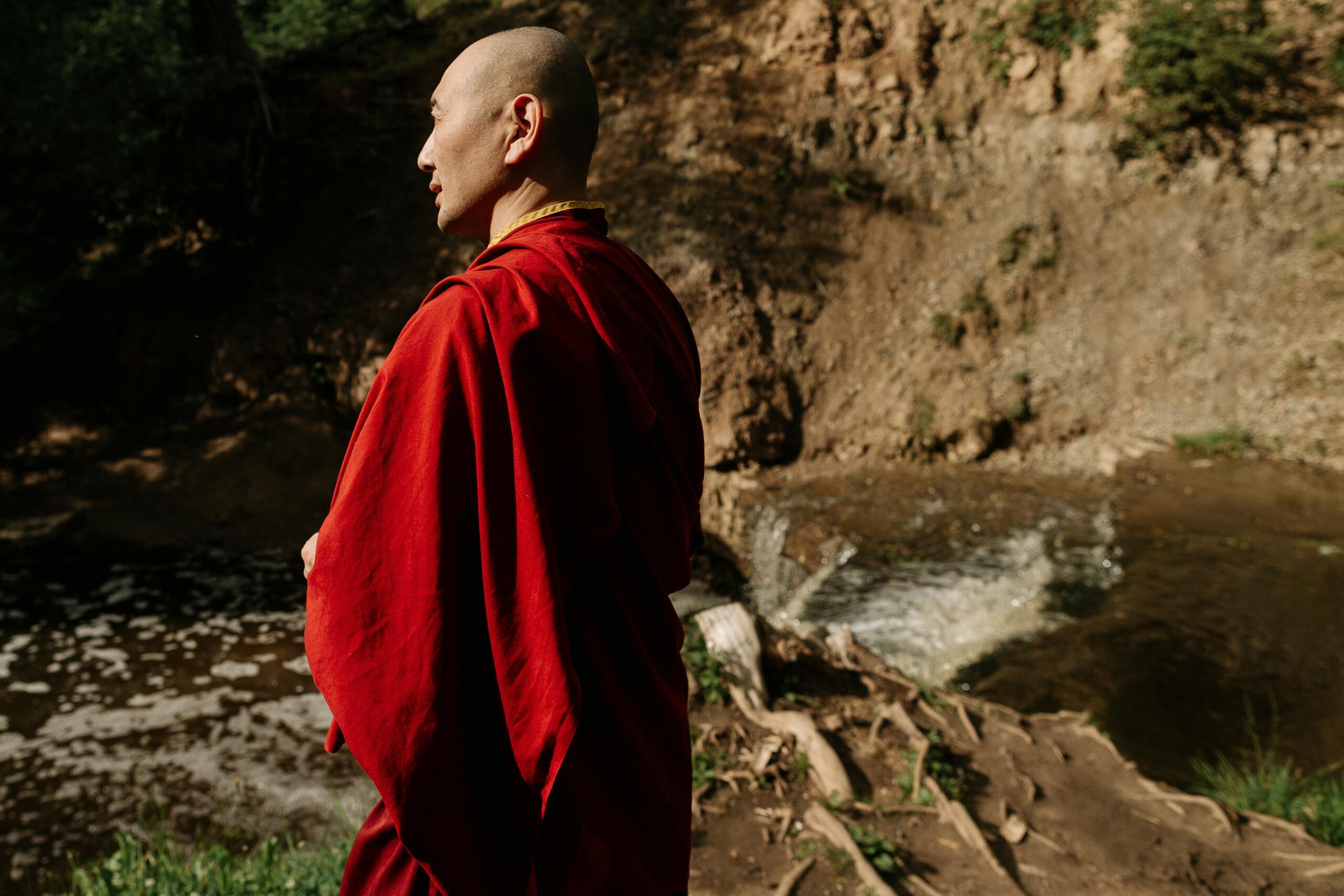
🌅 The Gift Wrapped in Challenge
Ultimately, embracing the weight of conscious existence means recognizing it as a gift—perhaps the fundamental gift of being human. While awareness brings challenges that other creatures never face, it also enables experiences and possibilities that justify the struggle. The question isn’t whether consciousness is worth its cost but how we can engage it most fully and skillfully.
This embrace doesn’t mean pretending the weight isn’t real or heavy. It means developing the strength to carry it, the wisdom to set it down when needed, and the perspective to appreciate what it enables. Conscious existence allows us to love, to create, to grow, to connect, and to participate meaningfully in life rather than merely surviving it.
The beauty of consciousness lies in its reflexive nature—we can use awareness to improve awareness, applying consciousness to the challenge of living consciously. This creates possibilities for continuous growth and transformation that remain available throughout life, regardless of external circumstances.
In accepting both the burden and the beauty of awareness, we stop fighting against the fundamental conditions of human existence and begin working with them creatively. We recognize that the weight we carry is also what gives us substance, depth, and significance. Without it, life might be easier, but it would also be emptier—a trade most of us, given genuine choice, would reject.
Living consciously is difficult work, but it’s also the only path to a fully human life. By embracing this challenge rather than avoiding it, by seeking support rather than struggling alone, and by finding meaning in the struggle itself, we transform the weight of existence from a burden to be endured into a journey to be treasured—one conscious moment at a time.
