
Anúncios
Reality often feels solid and certain, yet beneath its surface lies a profound mystery that challenges everything we think we know about existence. 🌌
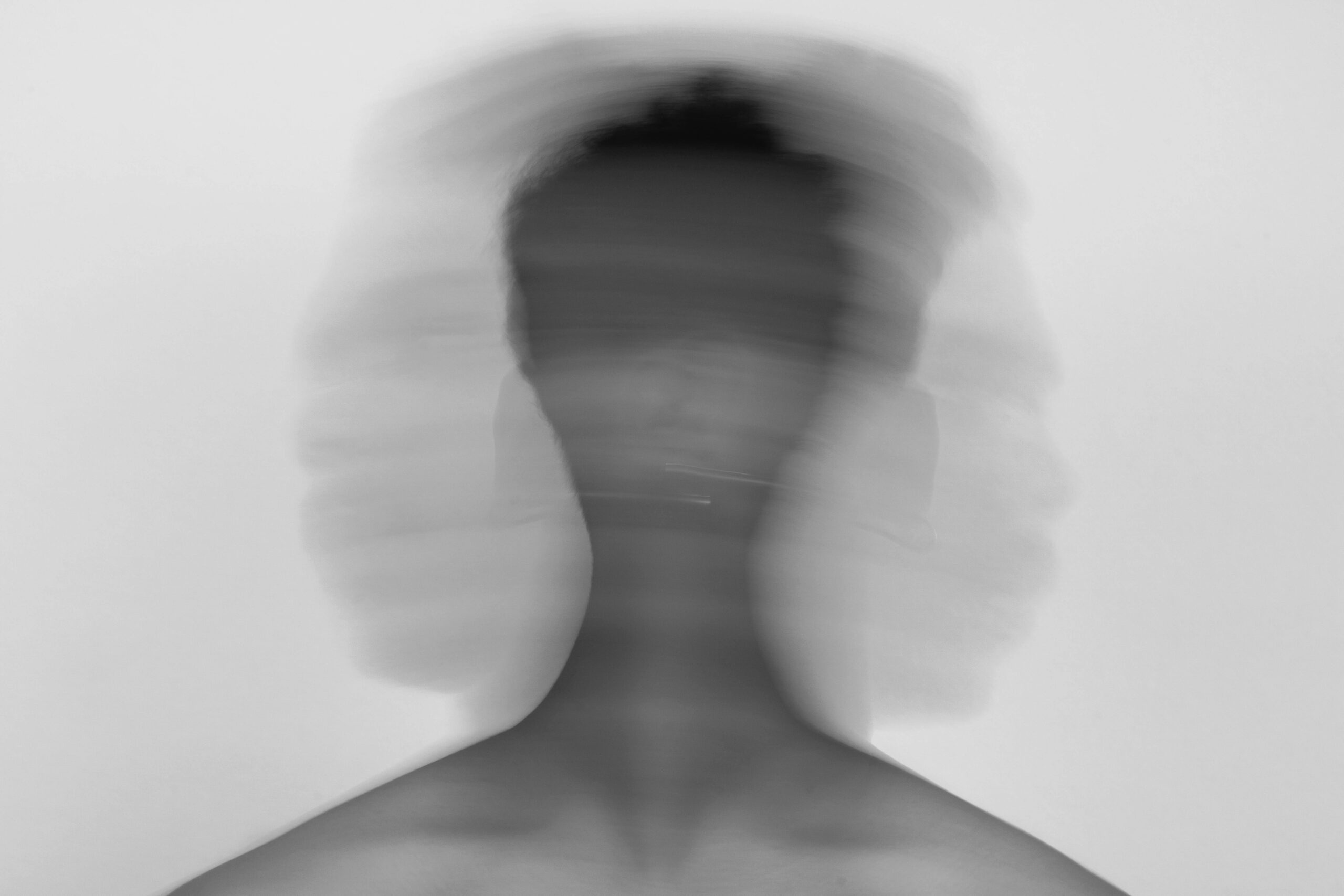
We live our daily lives under the assumption that what we see, touch, and experience represents the totality of existence. We wake up, go to work, interact with others, and rarely question the fundamental nature of the world around us. But what if everything we perceive is merely a construct—an elaborate illusion crafted by our minds, our senses, or perhaps something beyond our comprehension?
Anúncios
The concept that reality itself might be the ultimate mystery has captivated philosophers, scientists, and spiritual seekers throughout human history. From Plato’s allegory of the cave to modern quantum physics, humanity has grappled with the unsettling possibility that our perception of reality represents only a fraction of what truly exists. This exploration takes us on a journey through neuroscience, philosophy, quantum mechanics, and consciousness studies, revealing how fragile our grasp on reality actually is.
🧠 The Brain as Reality’s Architect
Our brains don’t simply record reality like a camera—they actively construct it. Every moment of your conscious experience is a sophisticated interpretation created by billions of neurons firing in complex patterns. The colors you see, the sounds you hear, and even the feeling of time passing are all mental constructs generated by your brain’s interpretation of sensory data.
Anúncios
Neuroscientists have discovered that our brains fill in gaps, make assumptions, and create seamless experiences from fragmented information. The blind spot in each of your eyes, for instance, goes completely unnoticed because your brain automatically fills in the missing information. This isn’t deception—it’s necessity. Our sensory organs provide limited data, and our brains must create a coherent narrative from incomplete information.
Consider the phenomenon of color. The wavelengths of light that hit your retina have no inherent “color”—color is an interpretation created entirely by your brain. A person with different cone cells in their eyes might experience colors in ways fundamentally different from your own experience. Which version is “real”? Both? Neither?
The Predictive Processing Model
Recent theories in neuroscience suggest that the brain operates primarily as a prediction machine. Rather than passively receiving sensory information, your brain constantly generates predictions about what it expects to experience next. What you consciously perceive isn’t raw sensory data but rather the brain’s best guess about what’s happening in the world, continuously updated when predictions prove incorrect.
This model explains numerous perceptual phenomena, from optical illusions to phantom limb sensations. It also raises profound questions: if experience is primarily prediction-based, how much of what we call “reality” is actually manufactured by our expectations, beliefs, and prior experiences?
⚛️ Quantum Mechanics and the Observer Effect
Perhaps nowhere is the mystery of reality more evident than in quantum mechanics. At the subatomic level, particles behave in ways that defy our everyday understanding of how physical objects should work. Quantum particles exist in states of superposition—simultaneously holding multiple possibilities—until observed or measured, at which point they “collapse” into a definite state.
The famous double-slit experiment demonstrates this bizarre behavior. When scientists fire electrons through two slits toward a detection screen, the electrons create an interference pattern characteristic of waves. However, when detectors are placed to observe which slit each electron passes through, the interference pattern disappears, and the electrons behave like particles instead.
This suggests that the act of observation itself influences physical reality at the quantum level. But what qualifies as an “observer”? Does consciousness play a role in collapsing quantum wave functions? These questions remain hotly debated among physicists and philosophers, with implications that shake the foundations of materialism and objective reality.
Quantum Entanglement and Non-locality
Quantum entanglement adds another layer to reality’s mystery. When particles become entangled, they remain connected regardless of the distance between them. Measuring the state of one particle instantaneously affects its entangled partner, even if they’re separated by vast cosmic distances. Einstein called this “spooky action at a distance” and spent years trying to disprove it, yet experimental evidence consistently confirms this phenomenon.
What does this tell us about the nature of space, time, and separateness? If particles can remain fundamentally connected across any distance, perhaps our perception of discrete, separate objects is itself an illusion—a macro-level approximation that breaks down when we examine reality’s quantum foundations.
🎭 Philosophical Perspectives on Reality’s Nature
Philosophy has long wrestled with questions about reality’s fundamental nature. Idealism proposes that reality is fundamentally mental or experiential rather than material. Bishop George Berkeley argued that objects only exist as perceptions in minds—”to be is to be perceived.” While this seems counterintuitive, it’s remarkably difficult to disprove.
Materialism or physicalism takes the opposite stance, asserting that only physical matter is fundamentally real, and consciousness emerges from material processes. However, materialism faces its own challenges, particularly the “hard problem of consciousness”—explaining how subjective experience arises from objective physical processes.
Dualism, associated with René Descartes, proposes that both mental and physical substances exist independently. Yet this view struggles to explain how these fundamentally different substances interact, leading to what philosophers call the “interaction problem.”
Simulation Theory: Are We Living in a Programmed Reality?
A contemporary philosophical hypothesis that has gained surprising traction is simulation theory—the idea that our reality might be an artificial simulation, perhaps created by an advanced civilization. Philosopher Nick Bostrom formulated this argument probabilistically: if civilizations eventually develop the capability to run realistic simulations of conscious beings, and if they run many such simulations, then statistically speaking, we’re more likely to be living in a simulation than in base reality.
While this might sound like science fiction, serious thinkers including Elon Musk have suggested there’s a significant probability we’re living in a simulation. The theory elegantly explains certain mysteries: the mathematical nature of physical laws could represent the code underlying the simulation, quantum mechanics’ observer effects might be computational optimization strategies, and the apparent fine-tuning of universal constants could reflect programming choices.
🌀 Altered States and Reality Tunnels
Our experience of reality can dramatically shift under certain conditions—meditation, psychedelic substances, sensory deprivation, extreme stress, or neurological conditions. These altered states reveal how malleable our sense of reality actually is. People report experiences ranging from ego dissolution and unity consciousness to encounters with seemingly autonomous entities and parallel dimensions.
Are these experiences revealing hidden aspects of reality, or are they merely aberrations of brain chemistry? The answer isn’t clear-cut. Neuroscience can map the brain changes associated with these states, but mapping neural correlates doesn’t necessarily explain the experiences themselves or determine their ontological status.
Writer Robert Anton Wilson coined the term “reality tunnel” to describe how our beliefs, assumptions, and perceptual filters create unique experiential worlds. Each person inhabits their own reality tunnel, perceiving and interpreting the world through their particular lens. What we call “reality” might be the overlapping consensus zone where individual reality tunnels intersect.
The Continuity of Self: Another Illusion?
Even our sense of being a continuous self persisting through time may be illusory. Buddhism has long taught the doctrine of anatta (non-self), suggesting that what we call the “self” is actually a constantly changing process rather than a fixed entity. Neuroscience increasingly supports this view, showing that memory is reconstructive rather than recordative, and that personality, beliefs, and even values can shift dramatically throughout life.
Each night when you sleep, consciousness disappears entirely. The person who wakes up tomorrow shares your memories (reconstructed and modified) and inhabits your body (which has replaced most of its cells multiple times), but is it the “same” person in any fundamental sense? The question of personal identity over time remains deeply mysterious.
🔬 The Measurement Problem and Limits of Knowledge
Science relies on measurement and observation, but these very tools may limit what we can know about reality. The uncertainty principle in quantum mechanics establishes fundamental limits on simultaneous knowledge of certain properties—you cannot precisely know both a particle’s position and momentum at the same time. This isn’t due to technological limitations but represents a fundamental feature of reality itself.
Kurt Gödel’s incompleteness theorems demonstrated that any sufficiently complex formal system contains true statements that cannot be proven within that system. If mathematical systems—pure abstractions—contain inherent limitations on knowability, how much more limited must our knowledge of physical reality be?
These findings suggest that complete, comprehensive knowledge of reality may be impossible in principle, not merely in practice. There may always be aspects of existence that remain beyond the reach of scientific inquiry, mathematical formalization, or human comprehension.
💫 Consciousness: The Ultimate Mystery Within the Mystery
Perhaps the deepest mystery of all is consciousness itself—the fact that there is something it’s like to be you, experiencing this moment. Why does subjective experience exist at all? Why isn’t everything just unconscious information processing, with no inner experience?
Philosopher David Chalmers calls this the “hard problem of consciousness.” We can study the neural correlates of consciousness, map which brain regions activate during different experiences, and understand the functional roles consciousness plays. But none of this explains why there’s an experiential quality to these processes—why they feel like something from the inside.
Some theories, like Integrated Information Theory or panpsychism, suggest consciousness might be a fundamental feature of reality rather than something that emerges from complex information processing. If consciousness is indeed fundamental, then perhaps reality is far more experiential and mind-like than the materialist worldview suggests.
The Binding Problem and Unity of Experience
Another mystery concerns how the brain creates unified conscious experiences from distributed processing. Visual information, auditory data, emotional responses, memories, and thoughts are processed in different brain regions, yet you experience them as a seamless, integrated whole. How does this unity emerge from separated processes? The binding problem remains unsolved, suggesting we still don’t understand something fundamental about how consciousness works.
🌍 Practical Implications of Reality’s Uncertainty
Understanding that reality might be fundamentally mysterious rather than ultimately knowable has profound practical implications. It can cultivate intellectual humility, recognizing that our current understanding represents one perspective rather than absolute truth. This humility opens space for dialogue across different worldviews and reduces dogmatism.
It also affects how we approach knowledge itself. Rather than seeking final, definitive answers, we might embrace provisional understanding—holding theories lightly while remaining open to revision. This doesn’t mean descending into radical skepticism where nothing can be known, but rather maintaining appropriate uncertainty about fundamental questions.
For personal well-being, recognizing reality’s constructed nature can be liberating. If your experience is significantly shaped by interpretation, expectations, and mental models, then changing those models can genuinely transform your experienced reality. This insight underlies many therapeutic approaches and contemplative practices.
🔮 Living with Mystery
Perhaps the appropriate response to reality’s ultimate mysteriousness isn’t to solve it but to embrace it. The compulsion to eliminate all uncertainty and mystery from existence might itself be misguided—a category error that treats wonder as a problem to be solved rather than an essential feature of existence.
Children possess a natural sense of wonder that adults often lose. A child seeing rain for the first time experiences genuine awe at water falling from the sky. Adults, knowing the meteorological explanation, rarely feel such wonder. But scientific explanations, while valuable, describe patterns without fully explaining why those patterns exist or why there’s something rather than nothing.
Maintaining a sense of mystery doesn’t require abandoning reason or scientific inquiry. Rather, it means recognizing that even our most sophisticated explanations point toward further questions. Every answer reveals deeper mysteries. Reality remains fundamentally astonishing—a cosmic gift whose ultimate nature may forever exceed our complete comprehension.
The illusion isn’t that reality exists, but that we fully understand it. By acknowledging this limitation, we unlock a profound appreciation for existence itself. We’re conscious beings, embedded in a mysterious universe, capable of contemplating our own existence and the nature of reality. This capacity for wonder, questioning, and awe might be the most extraordinary feature of reality—a mystery experiencing itself.
In embracing reality as the ultimate mystery, we don’t abandon the search for understanding but reframe it. Knowledge becomes a journey without a final destination, understanding deepens perpetually, and each discovery reveals new horizons of the unknown. This perspective transforms life from a puzzle to be solved into an infinite exploration—an adventure whose greatest reward isn’t arriving at final answers but engaging fully with the magnificent mystery of existence itself. ✨
