
Anúncios
In the quiet corridors of our minds, where memory meets reflection, lies a chilling narrative about losing oneself in the mirror’s gaze. 🪞
The human experience of self-recognition stands as one of our most fundamental cognitive abilities, yet what happens when that recognition falters? When the face staring back becomes a stranger, and the person you’ve always known dissolves into uncertainty? This psychological phenomenon forms the haunting foundation of countless real experiences and fictional narratives that explore the terrifying fragility of identity itself.
Anúncios
Throughout history, mirrors have served as powerful symbols in literature, folklore, and psychological study. They represent truth, vanity, portals to other realms, and most profoundly, the gateway to self-awareness. But when reflections vanish or transform, they become instruments of terror that challenge our most basic understanding of who we are.
🌑 The Psychology Behind Vanishing Identity
The concept of a vanishing reflection taps into deep-seated psychological fears that transcend cultural boundaries. Psychologists have identified several phenomena that relate to this unsettling experience, including depersonalization disorder, dissociative identity disorder, and Capgras syndrome, where individuals believe their reflection or loved ones have been replaced by imposters.
Anúncios
Depersonalization creates a disturbing disconnect between the self and one’s own existence. Sufferers often describe feeling like observers of their own lives, watching themselves from outside their bodies. When looking in mirrors, they report not recognizing the person staring back, despite intellectually knowing it’s their own reflection. This real psychological condition mirrors the horror of vanishing reflections in supernatural tales.
The neurological basis for self-recognition involves complex interactions between the visual cortex, memory centers, and regions responsible for self-awareness. When these neural pathways malfunction or become disrupted, the result can be profoundly disturbing. Research using fMRI scans has shown that recognizing one’s own face activates different brain regions than recognizing others, suggesting that self-perception operates through specialized mechanisms.
The Mirror Test and Consciousness
Scientists use the mirror test to assess self-awareness in animals and human infants. This simple experiment reveals profound truths about consciousness and identity. Subjects who pass the test demonstrate they understand the reflection represents themselves rather than another individual. But what happens when this fundamental recognition breaks down in fully developed human consciousness?
The implications extend beyond individual psychology into questions about the nature of consciousness itself. If our reflection can become unrecognizable, what does that suggest about the stability of identity? Are we simply patterns of neural activity that can dissolve under the right circumstances? These questions haunt both scientists and storytellers alike.
🎭 Historical Tales of Reflections Gone Wrong
Ancient cultures developed rich mythologies around mirrors and reflections long before modern psychology emerged. The Greek myth of Narcissus, who fell in love with his own reflection and wasted away gazing at it, serves as an early warning about the dangers of self-absorption. But other traditions present even darker possibilities.
Slavic folklore speaks of mirrors as doorways to the realm of the dead, which is why families traditionally covered mirrors when someone died, preventing the deceased’s soul from becoming trapped or allowing spirits to enter the world of the living. Jewish tradition includes similar customs during shiva, the mourning period.
In Japanese ghost stories, mirrors frequently appear as vessels for supernatural entities. The yūrei, or Japanese ghosts, often manifest through reflective surfaces, their vengeful spirits reaching across the boundary between worlds. These tales recognize mirrors as liminal spaces where the normal rules of reality become flexible and dangerous.
Victorian Spiritualism and Mirror Gazing
The Victorian era brought an obsession with spiritualism and communion with the dead. Mirror gazing became a popular practice for contacting spirits, with practitioners staring into mirrors in darkened rooms, hoping to see apparitions or receive messages from beyond. Participants often reported disturbing experiences, including seeing their own faces age rapidly, transform into other people, or disappear entirely.
These séance practices, while dismissed by skeptics, produced remarkably consistent reports of identity dissolution and reflection distortion. Modern psychologists attribute these experiences to optical effects, suggestion, and altered states of consciousness induced by prolonged staring in low light conditions. However, the psychological impact remained genuinely traumatic for many participants.
🔮 The Science of Mirror Gazing and Perceptual Distortion
Contemporary research has revealed fascinating insights into what happens when people stare at their reflections for extended periods. Italian psychologist Giovanni Caputo conducted experiments where subjects gazed at their own faces in dimly lit mirrors for ten minutes. The results were startling and consistent.
Within minutes, most participants reported profound distortions in their perceived reflections. Common experiences included:
- Seeing their faces age or become younger dramatically
- Perceiving their faces transform into those of relatives, ancestors, or complete strangers
- Witnessing monstrous or demonic features emerge from their own faces
- Experiencing their faces fade away or dissolve completely
- Seeing multiple faces overlap or flicker in rapid succession
These experiences weren’t hallucinations in the clinical sense but rather perceptual distortions arising from how our visual system processes information. When presented with unchanging stimuli, our brains engage in neural adaptation, where sensory neurons become less responsive. Combined with low lighting and the psychological intensity of prolonged self-scrutiny, this creates conditions for dramatic perceptual shifts.
The Troxler Effect and Facial Recognition
The Troxler effect explains how peripheral vision can cause stationary objects to fade from perception. When applied to mirror gazing, this neurological phenomenon contributes to the sensation of features disappearing or transforming. Our facial recognition systems, designed to quickly identify faces and emotional expressions, begin producing unexpected outputs when forced into prolonged, static observation.
This scientific explanation doesn’t diminish the profound psychological impact of these experiences. Participants in Caputo’s studies reported feeling disturbed, unsettled, and questioning their sense of self even after understanding the perceptual mechanisms involved. The experience of watching your identity dissolve, even temporarily, leaves lasting impressions.
📖 Literary Explorations of Vanishing Reflections
Writers have long been captivated by mirrors as narrative devices for exploring identity, duality, and the uncanny. Oscar Wilde’s “The Picture of Dorian Gray” inverts the mirror concept by creating a portrait that ages while its subject remains unchanged, ultimately leading to moral corruption and psychological disintegration.
Lewis Carroll’s “Through the Looking-Glass” presents mirrors as portals to alternative realities where logic inverts and identity becomes fluid. Alice’s journey through the mirror world represents a psychological exploration where the rules of identity and reality no longer apply, creating both wonder and existential uncertainty.
Contemporary horror literature frequently employs vanishing or distorted reflections as metaphors for mental illness, trauma, and identity fragmentation. Stephen King, Shirley Jackson, and countless others have recognized that few images disturb readers more deeply than the prospect of losing recognition of one’s own face.
The Mirror as Narrative Device
In storytelling, mirrors serve multiple functions beyond simple plot devices. They represent moments of truth and self-confrontation where characters must face aspects of themselves they’ve avoided. When reflections vanish or transform in these narratives, they externalize internal psychological processes, making the invisible visible and the abstract tangible.
This narrative technique resonates powerfully because it mirrors actual psychological experiences. Depression, trauma, and dissociation can create genuine feelings of not recognizing oneself, of becoming a stranger in one’s own life. Fiction that explores vanishing reflections therefore operates on both supernatural and deeply realistic levels simultaneously.
🧠 Identity in the Digital Age
Modern technology has created new dimensions to the question of reflection and identity. Social media platforms function as digital mirrors where we construct and present versions of ourselves, often curated and filtered beyond recognition. The phenomenon of “Instagram face” and extensive photo editing raises questions about which version represents the “real” self.
Face-swapping apps and deepfake technology have made it possible to literally see yourself with different features, ages, or as other people entirely. While often used for entertainment, these technologies touch on the same unsettling territory as traditional tales of vanishing reflections. When your image can be infinitely manipulated, what anchors your identity?
Video calling during remote work has created a phenomenon psychologists call “Zoom fatigue,” partly attributed to constantly viewing our own faces during conversations. This unprecedented amount of self-observation has psychological consequences, with many reporting increased dissatisfaction with their appearance and feelings of disconnect from their reflected image.
Virtual Reality and Self-Perception
Virtual reality technology enables people to inhabit avatar bodies that differ dramatically from their physical forms. Research into VR experiences reveals that embodying different appearances affects behavior, attitudes, and self-perception. When your reflected virtual self looks different, you begin to act differently, demonstrating the profound connection between appearance and identity.
These technological developments aren’t merely science fiction curiosities but rather extensions of age-old questions about the relationship between reflection and self. The digital mirror proves just as capable of disturbing our sense of identity as any haunted looking glass from Gothic fiction.
🌙 The Shadow Self and Jungian Psychology
Carl Jung’s concept of the shadow self provides a psychological framework for understanding vanishing reflection narratives. According to Jung, the shadow represents the unconscious aspects of personality that the conscious ego doesn’t identify with. These rejected or repressed elements don’t disappear but rather lurk beneath conscious awareness, occasionally emerging in dreams, art, and moments of psychological crisis.
When reflections transform or vanish in psychological horror, they often represent this shadow self emerging into consciousness. The monstrous face in the mirror symbolizes aspects of ourselves we refuse to acknowledge. The complete disappearance of reflection suggests a more complete dissociation where even the shadow becomes inaccessible, leaving only void.
Integration of the shadow represents a crucial stage in psychological development according to Jungian theory. Narratives about confronting disturbing reflections therefore serve as metaphorical guides to this integration process. The protagonist who must face their transformed reflection mirrors the psychological work of acknowledging and accepting all aspects of self.
🎬 Visual Media and the Horror of Lost Reflection
Film and television have exploited mirror imagery extensively, creating some of horror’s most memorable moments. The absence of vampire reflections in traditional lore translates visually to powerful scenes where mirrors reveal monstrous true natures. Modern horror films use mirrors for jump scares, but the most effective implementations go deeper, exploring genuine psychological terror.
Movies like “Black Swan” use mirrors to visualize psychological disintegration, with reflections that move independently or display alternative versions of the protagonist. These visual metaphors externalize internal experiences of identity fragmentation in ways that resonate powerfully with audiences.
The technical capabilities of cinema allow creators to show impossible reflections that violate our expectations. When a character’s reflection doesn’t match their movements or reveals something the camera doesn’t show, it creates profound cognitive dissonance that taps into primal fears about reality’s stability.
🕯️ Cultural Variations on Reflection Mythology
Different cultures have developed distinct beliefs about mirrors and reflections that reflect deeper values and fears. In some African traditions, mirrors can trap souls, requiring careful ritual handling. Chinese feng shui practices specify mirror placement to prevent negative energy accumulation or spirit entry.
Latin American folklore includes stories of mirrors as portals for supernatural entities, particularly during liminal times like midnight or during thunderstorms. These beliefs aren’t dismissed as mere superstition by practitioners but rather represent coherent systems of understanding the relationship between material and spiritual realms.
Indigenous Australian traditions include stories about water reflections and the relationship between physical and spiritual selves. These narratives recognize reflection not as simple optical phenomena but as meaningful interactions with aspects of reality that Western science often overlooks.
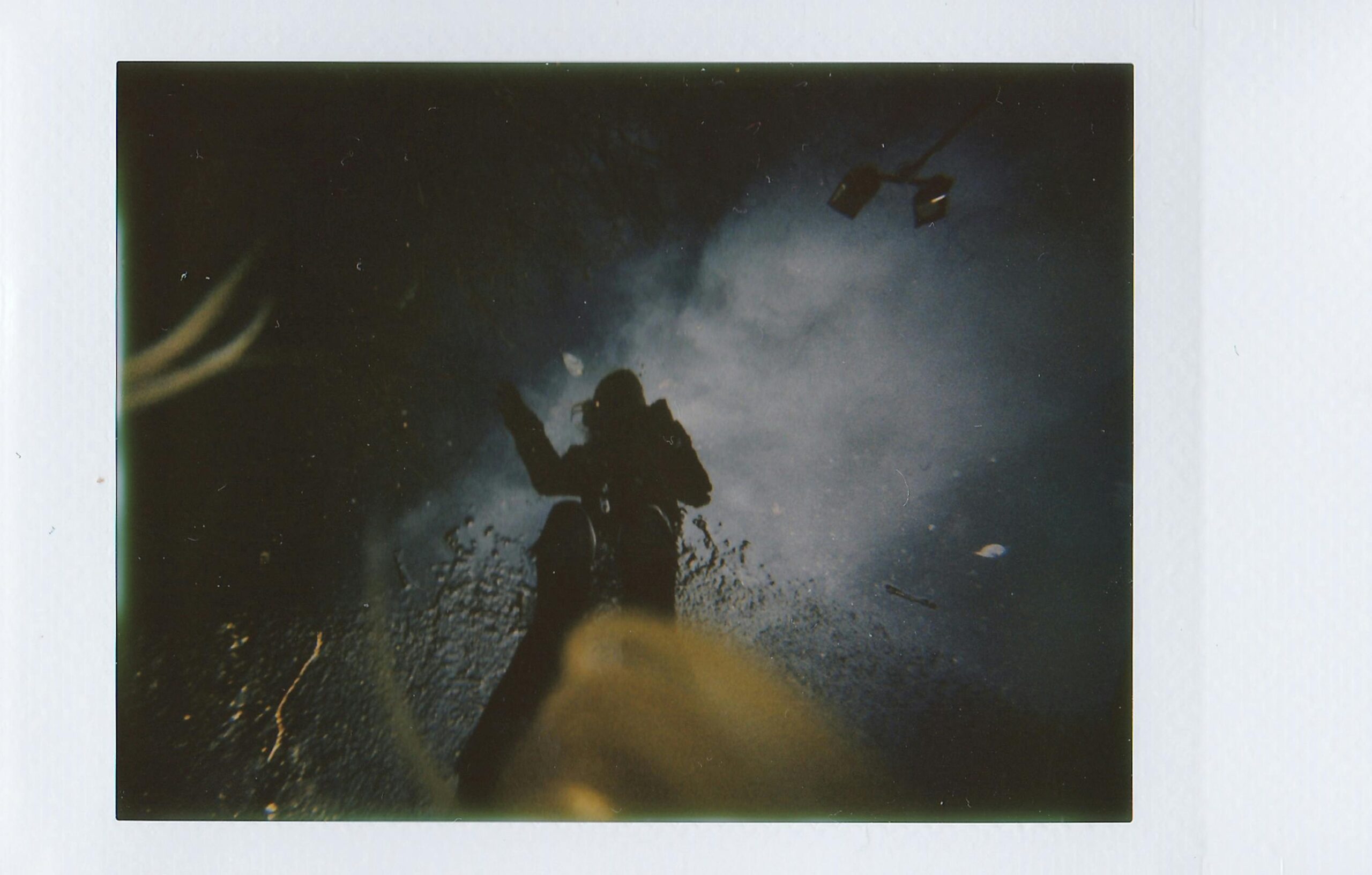
💫 Finding Yourself in the Darkness
The terror of vanishing reflections ultimately stems from our fundamental need for stable identity in an uncertain world. When the mirror no longer confirms our existence, we face existential questions that philosophy and religion have grappled with for millennia. Who are we if not the person we see reflected back?
Yet these dark narratives also offer paths toward integration and self-discovery. By confronting the possibility of lost identity, we’re forced to examine what truly grounds our sense of self. Is it physical appearance? Memory? Relationships? Consciousness itself? The haunting tale becomes a vehicle for exploring these profound questions.
Many who experience actual episodes of depersonalization or identity crisis report that moving through these dark periods ultimately led to stronger, more authentic self-understanding. The fragmentation, while terrifying, created opportunities to rebuild identity on more solid foundations.
The shadows within us don’t vanish when we avoid mirrors or refuse self-examination. They simply grow stronger in the darkness of inattention. The courage to face our reflections, even when they appear strange or disturbing, represents a crucial step toward psychological wholeness. The vanished reflection, whether literal or metaphorical, invites us to question, explore, and ultimately reclaim our sense of self from the void that threatens to consume it.
In the end, the most haunting aspect of vanishing reflections isn’t supernatural at all. It’s the recognition that identity remains fluid, constructed, and vulnerable throughout our lives. We are constantly vanishing and reconstituting ourselves, dying and being reborn in small ways with each passing moment. The mirror simply makes this invisible process momentarily visible, forcing confrontation with truths we usually avoid. And in that confrontation, despite the terror it provokes, lies the possibility of genuine self-knowledge and transformation. 🌟
