
Anúncios
History is not a fixed record carved in stone—it is a living, breathing narrative that shifts with every discovery, interpretation, and cultural moment. 📜
Our understanding of the past has always been subject to revision. What we considered absolute truth decades ago may now appear incomplete, biased, or entirely misconceived. This phenomenon isn’t a flaw in historical scholarship; rather, it reflects the dynamic nature of how we engage with our collective memory. As new evidence surfaces, methodologies advance, and societal perspectives evolve, history continually redefines itself, offering fresh insights into who we were and, consequently, who we are today.
Anúncios
The concept of history as something that evolves might seem paradoxical at first. After all, the events themselves—the wars fought, the civilizations risen and fallen, the treaties signed—are fixed points in time. Yet our interpretation, understanding, and even awareness of these events are anything but static. The stories we tell about the past reflect the concerns, values, and knowledge frameworks of our present moment.
🔍 The Archaeological Revolution: Unearthing New Truths
One of the most dramatic ways history evolves is through archaeological discovery. Every year, excavations around the world uncover artifacts, settlements, and human remains that challenge established narratives. These findings can overturn centuries of accepted wisdom in a single season.
Anúncios
Consider the discovery of Göbekli Tepe in Turkey during the 1990s. This archaeological site, dating back to approximately 9600 BCE, predates Stonehenge by some 6,000 years and the Egyptian pyramids by 7,000 years. Its existence forced historians and archaeologists to reconsider fundamental assumptions about the development of human civilization, particularly the relationship between agriculture, settlement, and monumental architecture.
Previously, scholars believed that complex social organization and monumental construction only emerged after humans had developed agriculture and established permanent settlements. Göbekli Tepe suggested the opposite might be true: perhaps the desire to gather for ritual purposes actually preceded and potentially motivated the agricultural revolution.
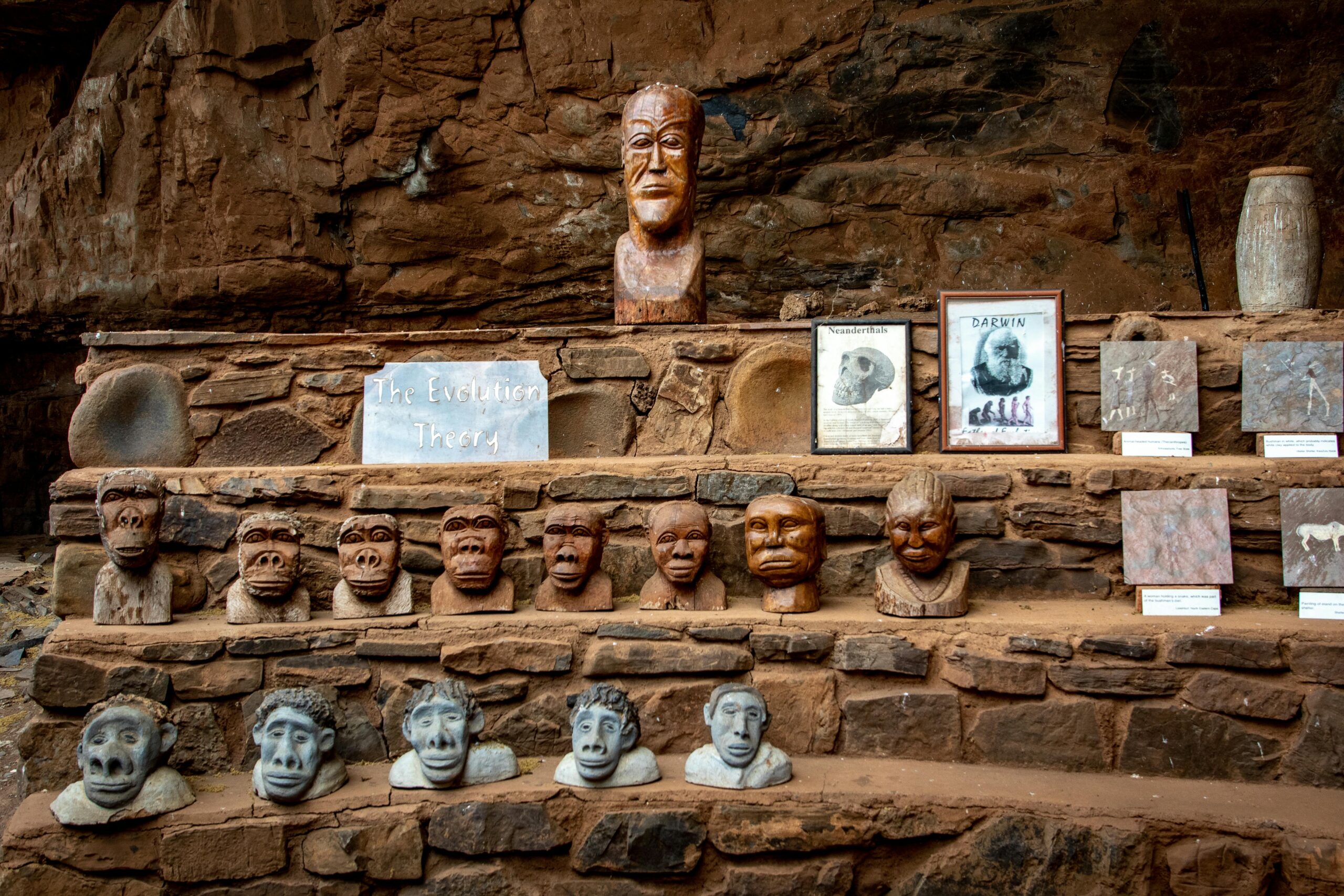
Similarly, DNA analysis has revolutionized our understanding of ancient migrations, interbreeding between human species, and the genetic heritage of modern populations. The revelation that most non-African humans carry Neanderthal DNA fundamentally altered how we view our evolutionary story, transforming Neanderthals from evolutionary dead-ends into integral parts of our own genetic makeup.
📚 Methodological Shifts: New Ways of Reading the Past
Beyond physical discoveries, the evolution of historical methodology itself continuously reshapes our understanding. The development of new analytical approaches allows historians to ask different questions and extract new meanings from existing sources.
The rise of social history in the mid-20th century exemplifies this transformation. Rather than focusing exclusively on political elites, military campaigns, and diplomatic relations, historians began examining the lives of ordinary people—peasants, workers, women, and marginalized communities. This shift didn’t change what happened in the past, but it dramatically expanded whose stories were considered worth telling.
Digital humanities represents another methodological revolution. Advanced computational tools now enable scholars to analyze vast quantities of text, identifying patterns invisible to traditional close-reading approaches. Topic modeling, network analysis, and geographic information systems reveal connections and trends across time and space that previous generations of historians could never have detected.
Quantitative Analysis and Historical Understanding
The integration of statistical methods into historical research has opened entirely new avenues of inquiry. Economic historians can now model long-term trends in trade, productivity, and wealth distribution with unprecedented precision. Demographic historians reconstruct population movements and vital statistics from fragmentary records.
These quantitative approaches don’t replace narrative history—they complement it, providing empirical foundations for broader interpretive arguments and sometimes challenging cherished assumptions with hard data.
🌍 Cultural Perspectives: Whose History Gets Told?
Perhaps no factor influences historical evolution more profoundly than shifting cultural perspectives. The questions we ask about the past reflect contemporary concerns, and as societies change, so too does their historical consciousness.
The history of colonialism offers a powerful example. For generations, European and American textbooks presented colonial expansion as a largely positive force—bringing civilization, Christianity, and commerce to “backward” regions. This narrative reflected the perspectives and interests of colonial powers themselves.
Post-colonial scholarship fundamentally challenged this interpretation, centering the experiences of colonized peoples and highlighting the violence, exploitation, and cultural destruction inherent in colonial projects. This wasn’t simply adding new information; it involved reconceptualizing the entire framework through which colonialism was understood.
Indigenous historians and communities have similarly worked to reclaim their own narratives from colonial distortion. Oral histories, dismissed by earlier scholars as unreliable, are now recognized as legitimate historical sources that preserve knowledge inaccessible through written records alone.
Gender and Historical Revision
The feminist movement sparked a wholesale reevaluation of historical narratives that had systematically marginalized or erased women’s experiences. Women’s history and gender history emerged as distinct fields, examining not only what women did but how gender as a social category shaped historical development.
This work revealed that women had always been active historical agents—rulers, revolutionaries, scientists, and artists—even when official records minimized their contributions. It also showed how gender norms themselves have varied dramatically across time and culture, challenging assumptions about natural or timeless gender roles.
🔬 Scientific Advances: Technology Rewrites the Timeline
Technological innovation provides historians with ever-more-sophisticated tools for interrogating the past. These techniques not only answer old questions more definitively but enable entirely new forms of historical investigation.
Radiocarbon dating, developed in the late 1940s, revolutionized archaeology by providing reliable absolute chronologies. More recent techniques like dendrochronology, thermoluminescence dating, and optically stimulated luminescence have further refined our ability to establish when events occurred.
Isotope analysis reveals information about ancient diets, migration patterns, and even climate conditions. Ground-penetrating radar and LiDAR technology allow archaeologists to map buried structures without excavation, leading to discoveries of lost cities hidden beneath jungle canopy or desert sands.
Paleoclimatology reconstructs past environmental conditions from ice cores, tree rings, and sediment samples, demonstrating how climate change influenced historical developments—from the collapse of civilizations to patterns of human migration.
💭 The Politics of Historical Memory
History never exists in a political vacuum. Nations, communities, and groups continually contest how the past should be remembered, understood, and commemorated. These struggles over historical memory reflect present-day power dynamics and future aspirations.
Debates over monuments and memorials illustrate this vividly. Statues honoring Confederate generals or colonial administrators become flashpoints when contemporary values no longer align with the historical narratives these monuments celebrate. Removing, contextualizing, or preserving such monuments involves implicit judgments about which histories deserve prominence and how past wrongs should be acknowledged.
Different nations remember the same events in strikingly different ways. World War II occupies radically different places in Russian, German, Japanese, and American historical consciousness. Each national narrative emphasizes particular aspects—heroic resistance, collective guilt, victimization, or triumph—that serve contemporary identity needs.
History Wars and Educational Curriculum
Educational systems become battlegrounds where competing historical interpretations clash. Should history curriculum emphasize national pride or critical examination? How should it address uncomfortable topics like slavery, genocide, or imperial conquest? These questions have no neutral answers—they involve fundamental choices about what kind of citizens and society we want to create.
Textbook controversies in countries from Japan to the United States demonstrate how high the stakes are. The narratives taught to children shape collective identity and national self-understanding for generations.
📖 Primary Sources: The Constantly Expanding Archive
Our access to historical sources continues to grow, fundamentally altering what histories can be written. Digitization projects make documents previously accessible only to researchers who could travel to specific archives available to anyone with an internet connection.
This democratization of access has profound implications. Amateur historians and genealogists contribute to collective historical knowledge. Communities can research their own histories without relying solely on professional scholars. Diverse voices enter historical conversations previously dominated by academic gatekeepers.
Moreover, newly discovered or declassified documents regularly force historical revision. Government archives release previously secret materials. Family attics yield forgotten diaries and letters. Each addition to the documentary record potentially changes our understanding.
🎭 Microhistory and the Power of Individual Stories
The microhistorical approach—focusing intensively on small-scale events or individual lives—demonstrates how zooming in can illuminate broader historical dynamics. By reconstructing the world as experienced by specific people in particular moments, microhistory reveals the texture of past lives and the complexity of historical change.
Carlo Ginzburg’s “The Cheese and the Worms,” examining the worldview of a 16th-century Italian miller through Inquisition records, showed how even fragmentary sources could illuminate popular culture and belief systems. This approach makes history more human and relatable while challenging grand narratives that smooth over contradiction and complexity.
🌐 Global History: Beyond National Narratives
The emergence of global history represents a conscious effort to transcend nationalist frameworks that have traditionally organized historical study. Rather than viewing history through the lens of nation-states, global historians examine transnational processes—migration, trade, disease, ideas—that cross political boundaries.
This perspective reveals connections invisible from purely national viewpoints. The Columbian Exchange, the Silk Road trade networks, the spread of world religions, and the integration of global capitalism all require frameworks that transcend individual nations.
Global history also challenges Eurocentric narratives by positioning Europe as one region among many rather than as the inevitable center of world development. It takes seriously the historical experiences and agencies of peoples previously relegated to the margins of historical consciousness.
🔄 The Recursive Nature of Historical Understanding
Historical revision isn’t a linear process moving steadily toward complete truth. Sometimes interpretations cycle back to positions closer to older views, though enriched by intervening debates. Historical understanding evolves through dialogue, argument, and synthesis rather than simple accumulation of facts.
Each generation must rewrite history for itself, not because previous generations were incompetent but because present concerns inevitably shape which aspects of the past seem most significant and how we interpret them. This doesn’t mean all interpretations are equally valid—evidence matters, and some arguments are demonstrably wrong. But within the bounds of evidence-based argument, multiple legitimate interpretations often coexist.
🎯 Living with Historical Uncertainty
Accepting that history continually evolves requires intellectual humility. We must hold our historical understanding provisionally, remaining open to revision while still drawing meaningful conclusions. This balance between confidence and openness distinguishes sophisticated historical thinking from both naive certainty and paralysing relativism.
The evolution of historical understanding shouldn’t undermine our ability to learn from the past. Rather, recognizing history’s dynamism enriches our engagement with it. Understanding that historical narratives are constructed doesn’t make them arbitrary—it makes us more conscious of how they’re built and what purposes they serve.
🚀 The Future of Historical Evolution
Looking forward, several trends will likely continue reshaping historical understanding. Artificial intelligence and machine learning will enable analysis of historical sources at unprecedented scales. Virtual reality might allow immersive experiences of reconstructed historical environments. Climate science will increasingly inform historical interpretation as we better understand how environmental change shaped human societies.
Perhaps most importantly, the continuing diversification of who gets to tell historical stories—which voices are heard and valued—will keep expanding what counts as history. As marginalized communities reclaim their narratives and new methodologies enable access to previously silent voices, our collective understanding of the human past will become richer and more complex.
The evolution of historical understanding reminds us that we are not passive recipients of the past but active interpreters who shape how it’s remembered and what it means. Each generation inherits a past but also recreates it, finding new significance and drawing different lessons. This ongoing dialogue between past and present, evidence and interpretation, continuity and change, defines the essential character of historical thinking. History remains perpetually in motion because we are—our questions evolving, our perspectives shifting, our understanding deepening. The past may be fixed, but our relationship with it never stops transforming, ensuring that history will always have new stories to tell and fresh insights to offer. 🌟
