
Anúncios
Every day, you believe you’re making independent choices. Yet beneath the surface, invisible forces are quietly shaping nearly every decision you make. 🧠
The sensation of free will feels undeniable. When you reach for your morning coffee, scroll through social media, or select what to wear, these actions seem completely voluntary. But neuroscience, psychology, and behavioral economics reveal a startling truth: most of our decisions are influenced by mechanisms operating far below conscious awareness. Understanding these hidden forces doesn’t strip away your autonomy—it amplifies it by revealing what truly drives human behavior.
Anúncios
The Neuroscience Behind Decision-Making Illusions
Your brain processes approximately 11 million bits of information every second, yet your conscious mind can only handle about 40 bits. This massive gap means that the vast majority of your decision-making happens automatically, without your awareness. The prefrontal cortex—the brain’s executive center—only gets involved when situations are novel or particularly complex.
Research by neuroscientist Benjamin Libet in the 1980s demonstrated something unsettling: brain activity indicating a decision occurs several hundred milliseconds before conscious awareness of that decision. More recent studies using fMRI technology have shown that researchers can predict choices up to 10 seconds before subjects report making them consciously. This doesn’t mean free will is an illusion, but it does suggest that the feeling of choosing happens after your brain has already begun the process.
Anúncios
The basal ganglia, a cluster of structures deep in your brain, stores patterns and habits. Once formed, these neural pathways activate automatically in response to specific cues. When you drive the same route home daily, you’re not consciously choosing each turn—your basal ganglia executes a well-rehearsed program while your conscious mind wanders elsewhere.
The Architecture of Influence: How Context Manipulates Choice
Choice architecture—the way options are presented—dramatically influences what you select, often without your knowledge. Supermarkets position high-margin items at eye level. Restaurants place their most profitable dishes in the upper-right corner of menus, where eyes naturally gravitate. Digital platforms use endless scroll features that exploit your brain’s novelty-seeking mechanisms.
Default options wield enormous power. When countries switch to opt-out organ donation systems rather than opt-in, participation rates soar from around 15% to over 90%. The actual decision—whether to be a donor—remains identical, yet the framing transforms outcomes. This reveals how passive our “choices” often are; we frequently accept whatever requires the least cognitive effort.
The Paradox of Too Many Options 🎯
Psychologist Barry Schwartz documented the “paradox of choice”: increasing options often decreases satisfaction and increases anxiety. In his famous jam study, shoppers encountered either 6 or 24 jam varieties. While more variety attracted more interest, the smaller selection generated ten times more purchases. Excessive options trigger decision paralysis, making people less likely to choose at all or less satisfied with their eventual choice.
This phenomenon extends across domains. Dating apps offering seemingly unlimited potential partners correlate with decreased relationship satisfaction. Streaming services with thousands of titles leave viewers scrolling endlessly, unable to commit to watching anything. The illusion that more choice equals more freedom often produces the opposite: decision fatigue and chronic dissatisfaction.
Social Proof and the Herd Mentality Algorithm
Humans are profoundly social creatures, and our decision-making reflects this. Social proof—the tendency to look to others’ behavior when uncertain—operates constantly in the background of your choices. Restaurant lines, product reviews, “most popular” labels, and viral trends all leverage this deep-seated psychological mechanism.
Solomon Asch’s conformity experiments demonstrated that people will deny obvious visual evidence to align with group consensus. In his studies, 75% of participants gave incorrect answers to simple questions at least once to match confederates’ wrong responses. This wasn’t about stupidity—it reflects how deeply our brains prioritize social belonging over objective truth.
Modern technology amplifies social proof exponentially. Algorithms curate content based on what others with similar profiles engaged with, creating filter bubbles where your exposure reinforces specific worldviews. “Trending” sections, like counts, and follower numbers all signal what the crowd validates, nudging your attention and choices accordingly.
The Invisible Weight of Authority and Expertise
Authority figures shape your decisions more than you’d probably like to admit. Stanley Milgram’s obedience experiments showed that ordinary people would administer what they believed were dangerous electric shocks simply because an authority figure instructed them to do so. While ethically controversial, these studies revealed the profound influence of perceived authority on behavior.
This principle operates daily in subtler forms. Doctor recommendations, expert testimonials, celebrity endorsements, and professional credentials all trigger automatic deference. Marketing leverages this relentlessly—actors in white coats, official-looking badges, and impressive titles all exploit your brain’s shortcut of trusting authority without critical evaluation.
Emotional Undercurrents That Hijack Rational Choice
Despite cherishing our rationality, emotions drive most decisions. Neuroscientist Antonio Damasio studied patients with damage to emotion-processing brain regions. Despite intact logic and intelligence, these individuals struggled with even simple decisions—what to eat, when to schedule appointments—because they lacked emotional guidance. Emotions aren’t obstacles to good decisions; they’re essential components.
The affect heuristic describes how feelings serve as information shortcuts. Your gut reaction to options—positive or negative—influences subsequent rational evaluation. Marketers exploit this constantly: luxury brands associate products with aspiration and status, insurance companies emphasize fear and security, and food advertising triggers pleasure responses before you’ve consciously considered nutritional value.
Fear and Scarcity: The Urgency Trap ⏰
Scarcity creates urgency that overrides careful deliberation. “Limited time offer,” “only 2 left in stock,” and “exclusive access” all trigger fear of missing out (FOMO), pushing you toward immediate action. This response has evolutionary roots—in ancestral environments, scarce resources required quick decisions. Modern marketers weaponize this ancient mechanism.
Fear appeals work by narrowing focus and accelerating decisions. Political campaigns, news media, and advertising frequently employ fear because it bypasses rational evaluation. When anxious, your brain prioritizes immediate threat response over careful analysis, making you more susceptible to manipulation and less likely to recognize when your “choice” is being engineered.
The Algorithmic Influence You Never Consented To
Perhaps no force shapes modern decisions more invisibly than algorithms. Recommendation engines, search results, social media feeds, and targeted advertising all operate through complex machine learning systems designed explicitly to influence your behavior. These systems know you better than you know yourself in many ways, predicting preferences from data patterns you’re unaware of generating.
Algorithms don’t merely respond to your preferences—they shape them. YouTube’s recommendation algorithm doesn’t just show you what you want; it guides you toward content that maximizes engagement (often increasingly extreme content). Amazon doesn’t just fulfill your needs; it creates them by showing you products similar to past purchases, creating consumption patterns.
The feedback loop becomes self-reinforcing. You click on content, the algorithm learns, it shows similar content, you engage with that, and the pattern deepens. Your “choices” become increasingly constrained to a narrowing path determined by maximizing corporate metrics—attention, engagement, purchases—rather than your authentic interests or wellbeing.
Nudging: Benevolent Manipulation or Authoritarian Control?
Behavioral economists Richard Thaler and Cass Sunstein popularized “nudging”—using choice architecture to guide decisions toward beneficial outcomes without restricting freedom. Examples include automatically enrolling employees in retirement savings (with opt-out options) or placing healthy foods at eye level in cafeterias.
Nudging raises fascinating ethical questions. If invisible forces inevitably shape decisions, should institutions design these forces toward positive outcomes? Or does any intentional manipulation—however benevolent—represent an unacceptable infringement on autonomy? The line between helpful guidance and manipulative control remains contentious and context-dependent.
Cognitive Biases: The Brain’s Systematic Errors
Your brain evolved for survival, not accuracy. This legacy left you with cognitive biases—systematic patterns of deviation from rationality. These aren’t occasional mistakes; they’re features of how human cognition operates, affecting everyone regardless of intelligence or education.
Confirmation bias causes you to seek information supporting existing beliefs while dismissing contradictory evidence. Anchoring bias makes initial information disproportionately influential—why negotiations start with extreme offers, why original prices are displayed next to sale prices, and why first impressions matter so much.
The availability heuristic makes easily recalled information seem more important or frequent than it actually is. This explains why dramatic plane crashes make people fear flying despite it being statistically safer than driving, and why media coverage of rare events distorts risk perception systematically.
Present Bias and the Tyranny of Now 📅
Humans consistently overvalue immediate rewards and undervalue future consequences. This present bias explains procrastination, poor health choices, insufficient retirement savings, and environmental degradation. Your present self makes decisions that your future self will regret, yet this pattern repeats endlessly.
This isn’t weakness—it’s neurological. The limbic system, which processes immediate rewards, responds faster and more powerfully than the prefrontal cortex, which handles long-term planning. Companies exploit this: “buy now, pay later” schemes, instant gratification features, and immediate pleasure delivery all leverage your brain’s temporal discounting.
Reclaiming Agency in an Engineered World
Understanding these hidden forces doesn’t lead to despair—it enables genuine autonomy. Awareness creates space between stimulus and response, allowing conscious evaluation rather than automatic reaction. You can’t eliminate these influences, but you can learn to recognize and sometimes resist them.
Start by noticing decision environments. When feeling urgency to purchase, ask whether scarcity is genuine or manufactured. When gravitating toward popular options, consciously evaluate whether majority preference aligns with your actual needs. When defaulting to convenient choices, pause to consider whether convenience serves you or merely reduces cognitive effort.
Practical Strategies for Conscious Decision-Making 🛠️
- Implementation intentions: Research shows that specifying when, where, and how you’ll act increases follow-through dramatically. “I’ll exercise sometime” fails; “I’ll walk for 20 minutes at 7am on weekdays” succeeds.
- Pre-commitment devices: Remove future temptation by constraining future options. Automatic savings transfers, website blockers, and social accountability all work by making undesired choices more difficult.
- Devil’s advocate thinking: Deliberately seek information contradicting your instincts. This counteracts confirmation bias and reveals blind spots in your reasoning.
- Decision journals: Document major choices, your reasoning, and outcomes. Reviewing these reveals patterns in your decision-making and biases you wouldn’t otherwise recognize.
- Sleep on it: For non-urgent decisions, delay allows emotional intensity to decrease and provides time for unconscious processing, often leading to better outcomes.
The Paradox of Understanding Influence
Here’s the fascinating twist: learning about these hidden forces changes how they affect you, but never eliminates their influence entirely. You’ll still experience cognitive biases, emotional reasoning, and social pressure even after understanding them intellectually. The human brain operates through these mechanisms; they’re not bugs to fix but features to navigate.
This knowledge creates what psychologists call “meta-awareness”—awareness of your awareness. You begin noticing when you’re being influenced, recognizing the machinery of persuasion at work, catching yourself falling into familiar mental traps. This doesn’t guarantee better decisions, but it shifts the odds significantly in your favor.
The most profound realization might be this: complete independence is neither possible nor desirable. Humans are fundamentally interdependent creatures, and much of what makes life meaningful involves connection, influence, and mutual shaping. The goal isn’t isolation from influence but conscious engagement with it—choosing which forces to welcome and which to resist.
Beyond Illusion: Authentic Choice in Context ✨
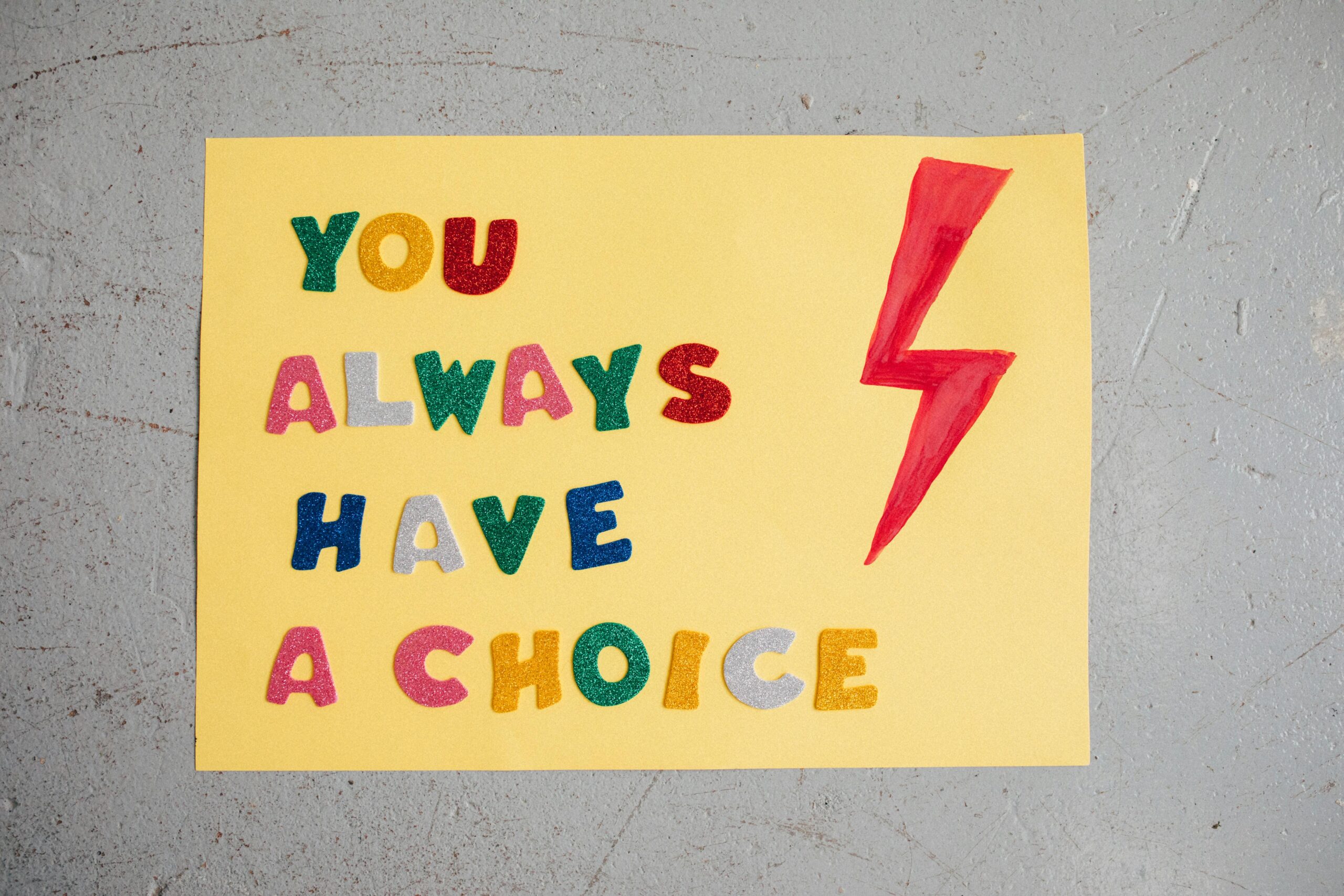
The phrase “illusion of choice” can sound nihilistic, as though your decisions are meaningless. But the truth is more nuanced and ultimately more empowering. Your choices are real and consequential, yet they emerge from complex interactions between conscious intention and unconscious processes, between individual preference and social context, between rational evaluation and emotional response.
Authenticity doesn’t require complete independence from influence. It requires alignment between your deepest values and your actions, conscious engagement with the forces shaping your decisions, and willingness to periodically step back and evaluate whether your patterns serve you. Some influences you’ll embrace—cultural traditions, expert guidance, loved ones’ perspectives. Others you’ll resist—manipulative marketing, toxic social pressure, self-destructive habits.
The hidden forces shaping your decisions operate constantly, invisibly, powerfully. But they’re not destiny. Awareness transforms influence from control to context—something to navigate rather than something that navigates you. Your choices remain yours, even when you understand the complex machinery generating them. And that understanding, paradoxically, makes those choices more truly free than the naive assumption that you decide in isolation ever could.
Each decision you make writes the next line in your life’s story. Understanding what’s really happening when you choose—the neurological processes, the social dynamics, the cognitive shortcuts, the algorithmic nudges—gives you a better pen. The narrative remains yours to write, now with clearer vision of what’s actually shaping each sentence.
